10 Essential Tips for a Stress-Free Moving Experience
When it comes time to make the big move — across the street or across the country — you need all the help you can get to stay organized and stress-free. After all, all it takes is a few misplaced fragile items to cause major headaches.
Don’t fret!
There are a few simple and easy steps you can take to ensure a stress-free experience. In this blog, we’ll cover the top 10 essential tips for a stress-free moving process, from packing supplies to finding a reputable moving company. Read on to discover what you should add to your moving checklist.
1. Don't Wait, Start Early With a Moving Checklist
For the most stress-free moving process, you’ll want to start early. Depending on the size of your current home and belongings, we recommend making a checklist 2–3 months prior to move-in day. What should be on your checklist? All the tasks you’ll need to tackle before, during, and after the move. For example:
- 2–3 Months Before: What do you need to throw away, donate, or sell? Consider starting a moving folder for effective progress tracking. This is also the time to contact a local moving company.
- 1–2 Months Before: Order packing supplies and begin packing non-essential items. This is also a good time to notify landlords, schools, and utility companies about upcoming disconnections and transfers.
- 2–3 Weeks Before: Start working on changing your address and confirming move-in day details. This is also a good time to continue packing.
- 1 Week Before: Prepare to dive deep into packing, cleaning your current home, and backing up digital files.
- Moving Day: Remember to do a final walk-through and lock up before you leave. We also recommend taking photos for your records.
- After the Move: Focus on unpacking, updating licenses, vehicle info, and registrations, and getting to know your neighbors.
These are a few of the most important moving tips, but remember that your moving checklist should be unique to your specific home, location, and circumstances.
2. Declutter To Speed Up The Packing Process
If you’ve ever committed to a spring-cleaning, you know that there are plenty of things lying around your home you don’t need. No need to waste the time bringing these unwanted items with you. Instead, before you start packing, go through your home to identify items you no longer use or need.
Not sure if you need something? Ask yourself:
- Have I used this in the past year?
If it’s collecting dust, you likely won’t miss it.
- Would I buy this again today?
If not, you may not have a use for it.
- Does this item serve a clear purpose?
Regardless of emotional meaning, if it doesn’t function, you might not need it.
- Do I have something else that serves the same purpose?
Don’t waste your packing space on duplicates.
- Will this fit or work in my new home?
Be realistic about your new space and lifestyle.
Giving away things doesn’t have to be stressful! In fact, you can use it as an opportunity to post used items for sale online, or host a yard sale. Not only will you streamline your future moving process, but also make a few bucks along the way.
3. Gather High Quality Packing Supplies
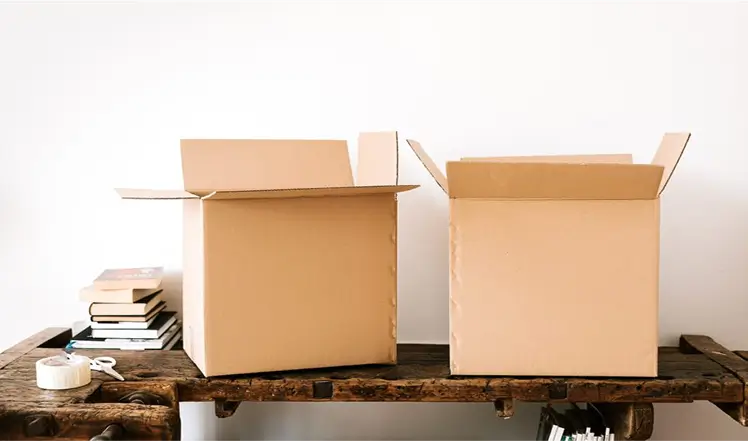
Packing can often feel like a daunting task, but it doesn’t have to be if you prepare yourself effectively. Invest in high-quality packing materials that will keep your items safe, including:
- Sturdy boxes of different sizes
- Large garbage bags
- Packing tape
- Bubble wrap, packing paper, or packing peanuts
- Markers for labeling
Consider what you’ll need to pack, including basic kitchen supplies, clothes, bedding, delicate items, etc. What an heirloom vase needs to stay safe during transit is different from what a temperature-sensitive candle collection needs.
4. Pack Strategically: One Room at a Time
For a smooth transition between the packing and unpacking process, we recommend packing one room at a time. This packing technique has two major benefits: keeping relevant, similar items together, and allowing you to strategically time your packing. For example, if you know you’ll need to use the kitchen and bedroom up until the last week, start with rooms that have less essential items. Has no-one used the basement in ages? That may be a good place to start.
As mentioned, packing room by room also ensures that similar items stay together, and organized. Moving into your new home is more smooth and stress-free when you can immediately put the “kitchen” boxes in the kitchen.
5. Label Boxes By Type and Priority
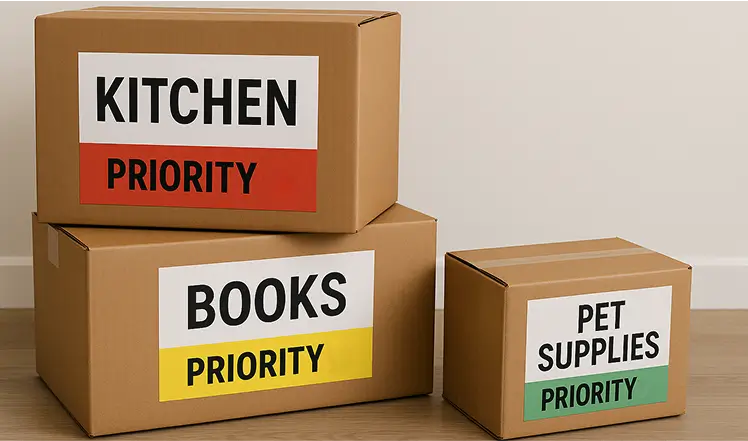
Your “kitchen” box is only as identifiable as it is labelled, so never skip out on labeling while you pack. To streamline the entire process, we suggest a twofold approach, where you sort items by both type and priority. Type is simple and self-explanatory, as you can choose whatever labels are easiest for you to remember or understand (kitchen, books, pet supplies, etc.)
When labeling by priority, try this system:
- Priority 1 (Red): These are any items you’ll need to use the first night you move in.
- Priority 2 (Yellow): Items you’ll want to have unpacked and ready for use within the first week.
- Priority 3 (Green): Non-essential items that can wait while you unpack other things.
With the combination of these two labeling systems, you’ll be packed and unpacked in no time!
6. Research Packing Techniques and Tips
Packing is like Tetris — the better you can fit the pieces together, the less stressful the experience. More than just labelling, effective packing requires strategic organization, and learning about the latest packing tips and techniques can help you keep items safe while reducing the amount of boxes you need.
Here are some of the latest packing techniques to help you get started:
- Tip #1: Use garbage bags for hanging clothes
If you’re worried about wrinkles, try storing your clothes in a separate bag while they’re still on the hanger.
- Tip #2: Pack heavy items in suitcases
Why strain your back trying to lift a heavy box when you can wheel books and other heavy things around with ease using a suitcase?
- Tip #3: Try packing cubes
These useful packing supplies help you sort your clothes and minimize the space they take up in boxes.
- Tip #4: Roll clothes instead of folding
Opting to roll your clothes can also help them take up less space and reduce wrinkles.
- Tip #5: Fill empty spaces with soft items
Tuck towels, scarves, or t-shirts into gaps in boxes to preventing shifting and breaking while in transit.
- Tip #6: Use clear bins for important items
Clear bins can help you identify boxes almost as quickly as labels, keeping essentials like electronics, toiletries, and documents easily visible.
7. Plan For Partners, Pets and Children
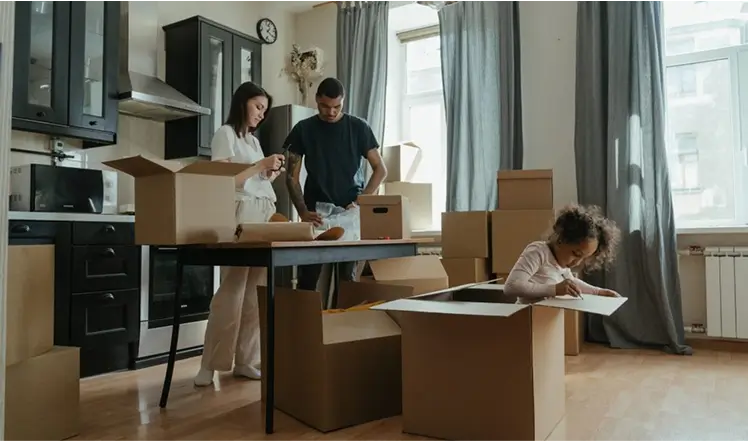
If you’re moving with someone else, whether a partner, pet, or children, accounting for their needs is another essential part of a stress-free move. Consider arranging child care or a pet sitter during the most labor-intensive parts of the moving process. You can also make your life easier with simple prep and communication. For instance, packing a separate “day-of” bag for each person (and pet) keeps everyone’s comfort items accessible, establishes clear plans and roles, and makes future unpacking less confusing.
8. Notify Involved Parties
A large and often overlooked part of the moving process is updating your address change with the right parties. We don’t just mean the local post office — from utilities to prescriptions, you’ll need to systematically organize important documents and update everything.
Notification can also be crucial for moving companies and homeowners association (HOA) or property management companies, as these parties may need to coordinate access, parking, or elevator use in and around move-in day.
Not sure who to contact? We’ve included an exhaustive list:
- Local post office
- Utility companies (electric, gas, water, internet, trash)
- Banks and credit card companies
- Streaming services and magazine subscriptions
- Voter registration and DMV
- Insurance providers
- Employer
- Schools and daycare providers
- Healthcare providers
- Online shopping accounts
- Landlord, HOA, or property manager
9. Take Care of Yourself
Proper planning goes a long way, but one of the simplest and most essential ways you can further reduce stress is by keeping up with your own needs. Stay hydrated, eat healthy meals at regular times, prioritize sleep, and avoid overexerting yourself while lifting and packing.
If you’re struggling with moving stress, it may be time to reach out to a reliable mover.
10. Hire Professional Movers
Knowing when to ask for help is the key to a fresh start, rather than a stressful one. Professional movers simplify the relocation process in a variety of ways, from helping to pack strategically to managing the heavy lifting for you. You can invest in many different services at different price points, from full-service packing, transportation, and unpacking, to just covering long-distance travel.
Reliable movers, like Pack N Move, personalize the experience to most effectively reflect your budget and moving needs. From local moves to interstate and long-distance relocations, we’ll provide an accurate, free quote. Plus, you can be confident knowing your items are always fully insured. Contact us today to start your stress-free moving experience.
Pack N Move Is Your Stress-Free Moving Partner
When preparing for your upcoming move becomes overwhelming, Pack N Move is your trusted partner. Our moving services are clear and upfront, so you won’t have to worry about any unexpected fees or charges. We work through all the typical stressors and tasks, handling sudden or urgent needs with experience. We’re committed to making sure your deliveries are on time, every time.
Get in touch with us today, and we’ll provide a free quote or estimate. We’ll reach out to you as quickly as we can to help you begin planning your move.